Category Archives: Uncategorized

Mull Music Festival

The Sound of Tobermory: A Guide to the Mull Music Festival

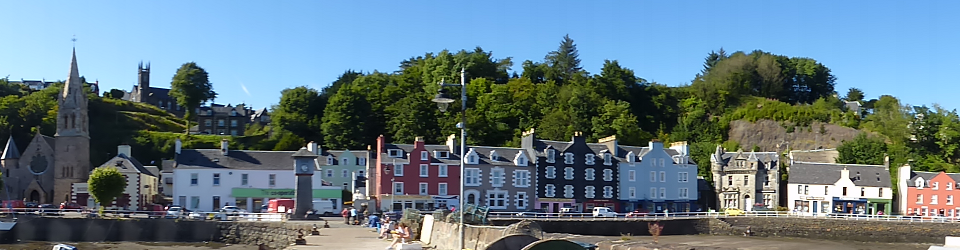
Every year in late April, the quiet, picture-perfect harbor of Tobermory transforms into the beating heart of the Scottish music scene. The Mull Music Festival is not your typical gated event with massive stages and mud-soaked fields; instead, it is a “pub-hopping” celebration where the music flows as freely as the local whisky.

A Festival Without Fences

What sets the Mull Music Festival apart is its accessibility and grassroots feel. Most of the events are non-ticketed and free, creating an inclusive atmosphere where locals and tourists rub shoulders in crowded snug bars and hotel lounges.

The festival primarily takes over the capital city of Tobermory, though sessions occasionally spill over into the nearby village of Dervaig. Attendees can wander the iconic colourful waterfront, following the sound of fiddles and accordions from one venue to the next.

What to Expect: The Soundscape

While the festival is firmly rooted in Scottish Traditional (Trad) music, the lineup is surprisingly diverse. On any given afternoon or evening, you might encounter

  • Folk-Rock Bands: High-energy groups that blend electric guitars with traditional melodies.

  • Ceilidh Bands: Fast-paced accordion and fiddle music that inevitably leads to spontaneous dancing.

  • Gaelic Singers: Intimate performances preserving the island’s rich linguistic heritage.

  • Acoustic Duos: Virtuosic displays of guitar, whistle, and pipes.

Key Venues

The “stages” for the festival are the legendary institutions of the island. If you’re planning a visit, these are the hubs you’ll likely find yourself in:

  • Macgochans: Known for its lively atmosphere and larger performances.

  • The Mishnish: An iconic yellow-fronted pub on the harbor with a long history of supporting live music.

  • The Western Isles Hotel: Often hosts more intimate sessions with panoramic views of the bay.

  • The Tobermory Hotel: A cozy spot for a “pub jolly” and a dram by the fire.


Eas Fors

Eas Fors: The Spectacular Three-Tiered Wonder of Mull

Located on the rugged west coast of the Isle of Mull, near Lagganulva, Eas Fors is arguably the most dramatic waterfall in the Inner Hebrides. Its name is a curious linguistic quirk: “Eas” is Gaelic for waterfall, and “Fors” is Old Norse for waterfall. Essentially, its name translates to “Waterfall Waterfall,” a double testament to its power.


A Triple-Threat Landscape

What makes Eas Fors unique is its distinct three-stage descent from the hills down to the Atlantic Ocean. Each level offers a different perspective and atmosphere:

 
  • The Upper Fall: A hidden gem situated above the road. It crashes into a deep, mossy pool surrounded by ancient ferns and rock formations.

     
  • The Middle Fall: Located just beside the B8073 road, this is the most accessible tier. It features a wide, powerful drop that flows under a stone bridge before preparing for its final plunge.

  • The Lower Fall: This is the “showstopper.” The water takes a final, breathtaking leap over a sheer basalt cliff, dropping over 100 feet directly toward the rocky shoreline below.


Visiting Eas Fors

The beauty of Eas Fors is that it requires very little hiking to appreciate, though caution is essential.

  • The View from the Top: You can walk right to the edge of the Lower Fall (the “lip” of the cliff). However, there are no railings or safety barriers. The drop is vertical and the grass can be incredibly slippery, especially in the typical Scottish mist.

  • The Best Vantage Point: For those who want to see the waterfall in its full vertical glory, a steep path leads down to the shoreline. From the bottom, looking up at the water silhouetted against the sky is a humbling experience.

  • Photography Tip: Visit after a heavy rainfall. The falls transform from a graceful ribbon into a thundering white wall of water, and the surrounding basalt columns (similar to those at Staffa) become slick and dark, providing a moody, cinematic backdrop.

How to Get There

Eas Fors is situated on the B8073, about 2 miles north of Ulva Ferry. There is a small gravel parking area nearby. It is a perfect stop-off point if you are heading toward the white sands of Calgary Bay or returning from a boat trip to Lunga or Staffa

Archaeology on Mull

The Isle of Mull, the second-largest island of the Inner Hebrides, is a sprawling “living history book” where the landscape itself serves as a repository for over 8,000 years of human activity. From the nomadic hunters of the Mesolithic to the powerful clan chiefs of the medieval era, the island’s archaeology offers a unique window into the survival and spiritual life of Scotland’s coastal ancestors.

The First Inhabitants: Mesolithic and Neolithic Roots
The story of Mull begins around 6000 BC with Mesolithic hunter-gatherers. Recent excavations at sites like Criet Dubh and Livingston’s Cave on the nearby Isle of Ulva have uncovered worked flint and stone tools, revealing a people who moved with the seasons, exploiting the rich marine resources of the Sound of Mull.

As the Neolithic period took hold (c. 4000 BC), the transition to farming left more permanent marks. While Mull is famous for its later monuments, these early settlers began the tradition of stone construction that would define the island’s skyline for millennia.

The Bronze Age: Stone Circles and Lunar Alignments
Mull is home to some of the most enigmatic prehistoric structures in Britain. The Lochbuie Stone Circle, the only complete circle on the island, consists of nine granite stones nestled at the foot of Ben Buie.

Perhaps more intriguing are Mull’s unique short stone rows (typically three to five stones). Research at sites such as Maol Mor, Glengorm, and Kilmore suggests these were not merely decorative. Archaeologists believe they were carefully oriented to track the moon’s cycle, often using the silhouette of Ben More, Mull’s highest peak, as a celestial marker. Excavations have found quartz chippings at these sites—crystals that would have shimmered under moonlight, perhaps during rituals meant to bridge the world of the living and the dead.

The Iron Age and Medieval Strongholds
As society became more stratified and defensive, the “Broch” appeared—massive, double-walled drystone towers unique to Scotland. On Mull, Dun nan Gall remains one of the best-preserved examples, its ruins still clutching the rugged west coast.

In the medieval era, the island became a theater of power for the Lords of the Isles and the Maclean clan.

Duart Castle: Perched on a high crag, it has been the seat of Clan Maclean for over 700 years.

Aros Castle: Now a haunting ruin, this 13th-century fortress was once a primary residence for the Lords of the Isles, strategically positioned to control the sea lanes.

Recent Discoveries: Chapels and Shipwrecks
Modern archaeology continues to reveal Mull’s secrets. In 2010, the Time Team excavated Baliscate Chapel near Tobermory, uncovering an early Christian settlement and a 13th-century “dotty pot” (pottery with distinctive indented designs).

Beneath the waves, the Sound of Mull serves as a maritime museum. The wrecks of 17th-century warships like the Swan and the Dartmouth have yielded incredible finds, including coins and even surviving medicinal ointments, offering a rare glimpse into the seafaring conflicts of early modern Britain.

Whether through the lens of a telescope at a stone row or a trowel at a medieval chapel, the archaeology of Mull proves that the island has never been an isolated outpost, but rather a central hub of culture, spirituality, and defence for thousands of years